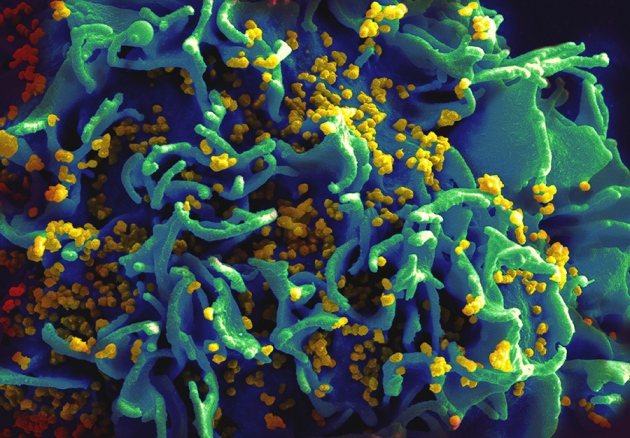
Scientists conduct experiment to potentially cure HIV by editing Gene

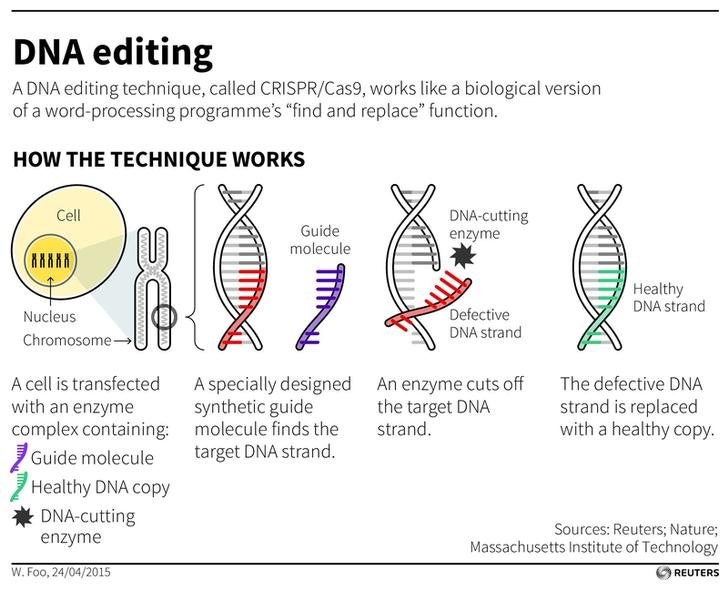
Recently scientists show a big hope to get rid of HIV permanently through DNA modification. It now shows up researchers have effectively wiped out the HIV DNA in live mice by utilizing a technique known as Gene Editing. This technique is called as "CRISPR gene-editing technology ". The CRISPR  gene-editing technology allowed scientists to “cut out the bad genes and let the rest be”. 
This initial experiment seemed to have been generally effective, in spite of the fact that it is still excessively ahead of schedule to finish up this as a working solution.  Scientists at the Lewis Katz School of Medicine at Temple University  (LKSOM) and the University of Pittsburgh already proved that they can excise HIV DNA from the genomes of living animals to eliminate further infection permanently. To be more exact, the reality this technique works fine on a living animal is a noteworthy achievement. However,  scientists performed the feat in three different animal models,  including a "humanized" model in which mice were transplanted with  human immune cells and infected with the virus. In any case, that does not mean experiments on human beings will yield similar outcomes. To handle this issue, the group of researchers expects to attempt this technique on primates very soon.
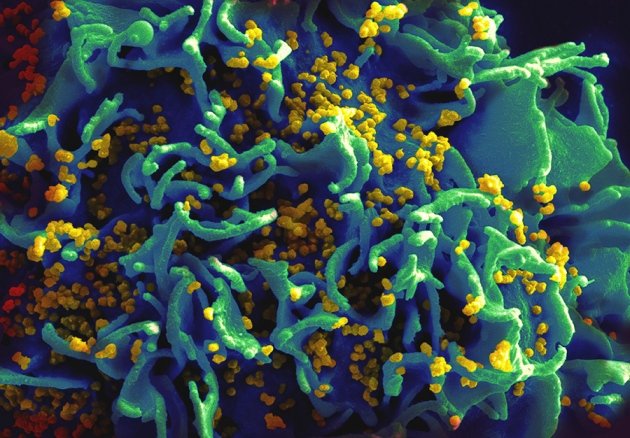
A few researchers aim to modify genes made by immune cells that HIV usually infects — called T partner cells — so that the infection can't discover a route in. Others take an alternate tack: outfitting the T cells with gene-editing  instruments so they can look for and annihilate any HIV that infects them. At the point when HIV infects a T cell, its genome is embedded into the cell's DNA and captures its DNA-duplicating machinery to produce more duplicates of the virus. In any case, a T cell furnished with a DNA-shearing enzyme called Cas9, together with modified bits of RNA that guide the enzyme to a specific arrangement in the HIV genome, could discover, cut and disabled the intruder's genome.
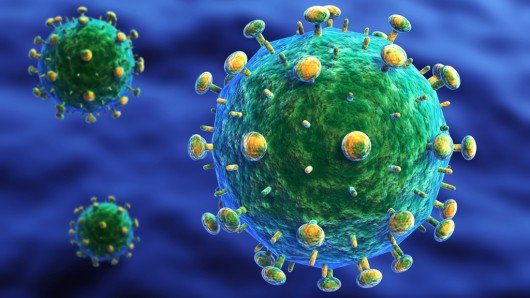

The researchers exhibit that HIV-1 replication can be totally stopped and the virus eliminated from infected cells in animals gene editing technology, CRISPR/Cas9. The whole research work was led by Wenhui Hu, Associate Professor in the Center for Metabolic Disease Research and the Department of Pathology in the Department of Neuroscience) at LKSOM, Kamel Khalili, Professor and Chairman of the Department of Neuroscience, Director of the Center for Neurovirology, and Director of the Comprehensive NeuroAIDS Center at LKSOM and Won-Bin Young, Assistant Professor in the Department of Radiology at the University of Pittsburgh School of Medicine at the season of the exploration.

Dr  Wenhui Hu stated --
 "Our new study is more comprehensive. We confirmed the data from our previous work and have improved the  efficiency of our gene editing strategy. We also show that the strategy  is effective in two additional mouse models, one representing acute  infection in mouse cells and the other representing chronic, or latent,  infection in human cells." 
In the new study, this researcher group genetically inactivated HIV-1 in transgenic mice, diminishing the RNA articulation of viral genes by about 60 to 95 percent. They then tried their framework in mice intensely infected with EcoHIV, the mouse equivalent of human HIV-1.
Dr. Kamel Khalili stated that --
 "During acute infection, HIV actively replicates. With EcoHIV mice, we were able to investigate the ability of the  CRISPR/Cas9 strategy to block viral replication and potentially prevent  systemic infection.The excision efficiency of their strategy reached  96 percent in EcoHIV mice, providing the first evidence for HIV-1  eradication by prophylactic treatment with a CRISPR/Cas9 system. "
To decide the achievement of the technique, the researcher group measured levels of HIV-1 RNA and utilized a novel live bioluminescence imaging framework. Dr. Kamel Khalili stated that -
 "The imaging system, developed by Dr. Young while at the University of  Pittsburgh, pinpoints the spatial and temporal location of  HIV-1-infected cells in the body, allowing us to observe HIV-1  replication in real-time and to essentially see HIV-1 reservoirs in  latently infected cells and tissues," 

 "The next stage would be to repeat the study in primates, a more suitable  animal model where HIV infection induces disease, in order to further  demonstrate elimination of HIV-1 DNA in latently infected T cells and  other sanctuary sites for HIV-1, including brain cells," 
References :


Tags : Science, Medical, Health, News, Amazing News, HIV

This Post Was Published On My Steemit Blog. Please, navigate to steemit and cast a free upvote to help me if you like my post. First Time heard about Steemit ? Click Here To Know Everything About Steemit 


Comments

Popular Posts (Last 7 Days)

One Black & White Photograph Daily for 30 days - Day #30

In front of a park, a jackfruit tree & a row of palm trees Camera : Nokia Model : N78 Location : Kolkata, West Bengal, India Snap Taken : 25 May 2009 Tags : Black & White Photography, Flowers & Plants photography, Landscape photography, Nature, Photography,  This Post Was Published On My Steemit Blog . Please, navigate to steemit and cast a free upvote to help me if you like my post. First Time heard about Steemit ? Click Here To Know Everything About Steemit  $3 Donation [Fixed] Donate $Any Amount

One Black & White Photograph Daily for 30 days - Day #25

green yard - behind of my village home Camera : Xiaomi Model : 2014818 Location : Bongaon, West Bengal, India Snap Taken : 14 March 2016 Tags : Black & White Photography, Flowers & Plants photography, Landscape photography, Nature, Photography,  This Post Was Published On My Steemit Blog . Please, navigate to steemit and cast a free upvote to help me if you like my post. First Time heard about Steemit ? Click Here To Know Everything About Steemit  $3 Donation [Fixed] Donate $Any Amount

What I Learnt Today : 10 Unknown Amazing Facts About Animals - Part CXXXIII

  image credit (1) Japanese Macaques make snowballs for fun. (2) The chevrotain is an animal that looks like a tiny deer with fangs. (3) Turritopsis nutricula Immortal jellyfish is the only species known to live forever. (4) One million stray dogs and 500,000 stray cats live in New York City metropolitan area. Turritopsis nutricula Immortal jellyfish   image credit (5) Nine-banded armadillos always give birth to identical quadruplets. (6) The flying frog uses flaps of skin between its toes to glide. (7) It takes a sloth two weeks to digest its food.   Nine-banded armadillo   flying frogs   image credit (8) A narwhal tusk is actually an exaggerated front left tooth, and unlike most teeth, it's soft and sensitive on the outside with a tough interior. (9) Humpback whales create the loudest sound of any living creature. (10) The slowest mammal on earth is the tree sloth. It only moves at a speed of 6 feet (1.83 meters) per minute. slot...

photographs of very rare creatures "Gharial (Gavial)" [my 100% original work]

Today I share two photographs of very rare creature  Gharial  or,  Gavial . They are one kind of reptile. And they are also known as " fish-eating crocodile ". They are normally found in the northern India. The global wild gharial population is estimated at fewer than 235 individuals, which are threatened by loss of riverine habitat, depletion of fish resources, and entanglement in fishing nets. As the population has declined drastically in the past 70 years, the gharial is listed as  Critically Endangered  on the  IUCN Red List   (source wikipedia) . Read more about Gharial in  Wikipedia .  The gharial is one of the longest of all living crocodilians, measuring up to 6.25 m (20.5 ft), though it should be noted that this is an extreme upper limit, as the average adult gharial is only 3.5 to 4.5 m (11 to 15 ft) in size.With 110 sharp, interdigitated teeth in its long, thin snout, it is well adapted to catchin...

Visiting deep inside the Sundarbans & spent days with Bawali - Episode #01

In the last October I visited Sundarbans, the world's one of the largest mangrove forest. It was also declared as world heritage site by UNESCO in 1997. In this forest a numerous wildlife species exist - birds, reptiles, fishes, amphibians and also the king of the forest "Royal Bengal Tiger". The ganges dolphins & crocodiles are also living in the canals of Sundarbans. Chital is a one kind of striped deer living in this forest. The rural life in the area of this coastal forest is also very attractive. They basically maintain their lives by collecting honey, woods and fishes In the native language they are called as Bawali. I spent 2 days with them. Here I share some of my tour photographs of Sundarbans and Bawali -- I captured these two photographs inside the home of a Bawali family, In a village of Sundarbans Camera : SONY Model : DSC-W710 Location : Sundarbans, West Bengal, India Snap Taken : 30 Oct 2017 To Be Continued... Tags : Photography, Life, I...

What I Learnt Today : 10 Unknown Amazing Facts About Animals - Part XLV

image credit (1) The largest bat colony in the world in Bracken Cave, Texas. There exists approximately 20 million bats. (2) Tigers not only have stripes on their fur, they also have them on their skin. No two tigers ever have the same stripes. (3) Seahorse dads carry fertilized eggs in their pouch and can give birth to hundreds of babies at a time. (4) George Washington’s teeth were made of elephant ivory, and walrus tusks. Tigers have also stripes on their fur   image credit (5) It’s really unbelievable that moths have no stomach. They digest their food in entrails. (6) A python can swallow a rabbit whole and may eat as many as 150 mice in a six-month period. (7) Butterflies can taste with their feet. A python swallows a rabit   image credit (8) Around 50 percent of orangutans have fractured bones, due to falling out of trees on a regular basis. (9) It’s hard to believe that cats dream in the sleep like humans. (10) Trained Dogs can detect canc...

What I Learnt Today : Pterodactyl was not only the flying dinosaur, There were many

What I Learnt Today : Pterodactyl was not only the flying dinosaur, There were many image source & credit :  LINK We are all familiar to Pterodactyl, the flying dinosaur. But, actually there existed so many flying dinosaurs. The common name of all this “flying dinosaurs” is Pterosaurs. There are about 130 genus of Pterosaurs existed in the jurassic period. Here I listed some of them — 1. Pterodactyl The Pterodactyls had a couple of very wide wings up to 40 feet long. But, these wings are not similar to modern bird’s wings. There were no feathers , their wings were made of a leathery substance. They lived near the sea in the cave & trees. They ate sea fish, large insects & other small dinosaurs. We found their fossils in Europe, North America, Australia, and Africa. Pterodactyl image source & credit :  LINK Pterodactyl Fossil image source & credit :  LINK 2. Petinosaurus Petinosaurus wings were formed by membranes of s...

Before A Heavy Rainfall

I clicked at the exact time ; after about 5 minutes rain started Location : Dakshineswar, Kolkata Snap taken : 02 August 2016 Camera : Xiaomi ; model - 2014818 Tags : Photography, Nature, Landscape photography, Flowers & Plants photography, Sky,  This Post Was Published On My Steemit Blog . Please, navigate to steemit and cast a free upvote to help me if you like my post. First Time heard about Steemit ? Click Here To Know Everything About Steemit  $3 Donation [Fixed] Donate $Any Amount

Amazing arts by unknown artists - Series #26

I captured all these art photographs in the Kolkata Book Fair, 2018. I tried to know the original artists of these awesome arts, but, failed. Enjoy this awesome arts. All credits goes to the unknown artists :) To Be Continued.. Previous Episodes :  Episode#01 ,  Episode#02 ,  Episode#03 ,  Episode#04 ,  Episode#05 ,  Episode#06 ,  Episode#07 ,  Episode#08 ,  Episode#09 ,  Episode#10 ,  Episode#11 ,  Episode#12 ,  Episode#13 ,  Episode#14 ,  Episode#15 ,  Episode#16 ,  Episode#17 ,  Episode#18 ,  Episode#19 ,  Episode#20 ,  Episode#21 ,  Episode#22 ,  Episode#23 ,  Episode#24 ,  Episode#25 Tags : Art, Drawing, Fine arts, Painting, Photography,  This Post Was Published On My Steemit Blog . Please, navigate to steemit and cast a free upvote to help me if you like my post. First Time heard about Steemit ? Click Here To Know Everything Abou...

What I Learnt Today : 10 Unknown Amazing Facts About Animals - Part CXXIV

image credit (1) Mantis shrimp have four times as many color receptors in their eyes as humans do. (2) Are you a sleepy guy ? You will be astonished to hear that ferrets sleep around 20 hours a day. (3) Infant Pygmy Marmosets babble to develop their language skills, similarly to the way human babies babble. (4) At birth, a panda is smaller than a mouse and weighs about four ounces. ferret   image credit (5) Two-toed sloths cannot shiver to stay warm like other mammals due to their low metabolic rates and little muscle tissue. (6) Though butterflies have various colors on their bodies. They can only see the colors red, green and yellow. (7) Bumblebees have hair on their eyes.   Infant Pygmy Marmoset Baby Panda at birth   image credit (8) Slow loris may be cute, but it’s the only venomous primate in the world. When it raises its arms, it’s performing a defensive stance, and preparing a venom. (9) The Chameleon can focus its eyes seperately to watc...
Back to Top